
It’s no secret that vegetables are essential for good health, but did you know that a vegetable-rich diet can significantly lower your risk of heart disease?
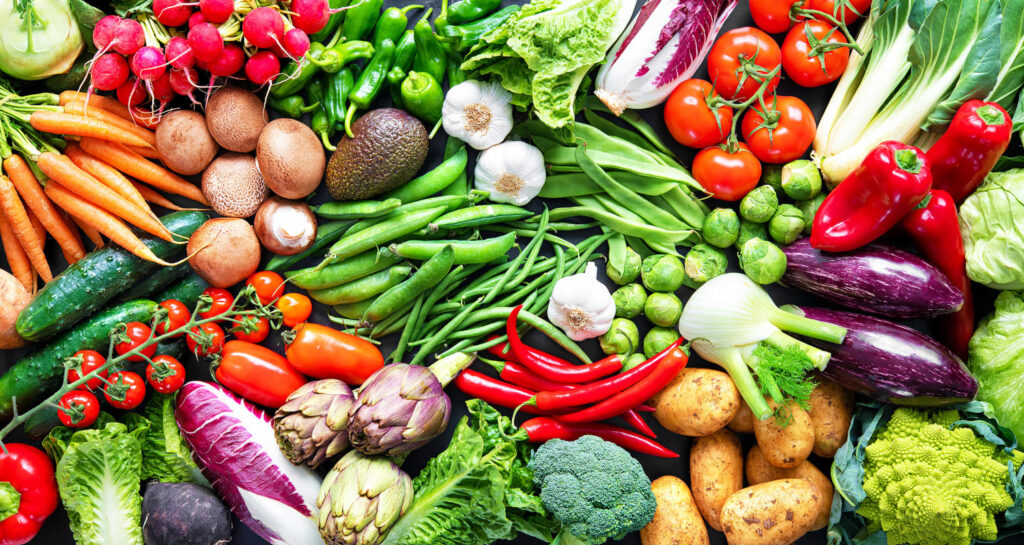
Research, including a 2021 study published in Nutrients, highlights that high vegetable consumption is linked to lower blood pressure, improved cholesterol levels, and reduced inflammation, all key factors in cardiovascular health (1).
According to the World Health Organization (WHO), low vegetable intake is among the top dietary risk factors for heart disease globally (2). If you’ve taken our Heart-Healthy Diet Assessment Quiz, you’re already on the right path to understanding how your diet impacts your cardiovascular health.
One of the best things you can do for your heart is to increase your intake of vegetables while reducing processed foods high in sodium, unhealthy fats, and added sugars. In this article, we’ll explore how different groups of vegetables support heart health, their additional health benefits, and practical ways to include them in your daily diet.
Why Replace Processed & Unhealthy Foods with Vegetables?
Many processed foods contribute to heart disease risk due to:
- Excess Sodium → Raises blood pressure, increasing stroke and heart attack risk (3).
- Trans & Saturated Fats → Increase LDL cholesterol, leading to arterial plaque buildup (4).
- Refined Carbohydrates & Added Sugars → Cause inflammation, insulin resistance, and obesity, increasing heart disease risk (5).
How Vegetables Improve Heart Health
✅ Lower Blood Pressure: Many vegetables are high in potassium, which counteracts sodium’s harmful effects (6).
✅ Reduce Cholesterol: Fiber-rich vegetables help remove excess LDL cholesterol from the body (7).
✅ Combat Inflammation: Antioxidants, polyphenols, and flavonoids protect arteries and reduce inflammation, a key driver of heart disease (8).
To make things simple, we’ve grouped 30 heart-healthy vegetables based on their nutritional benefits and how they support cardiovascular health.
1. Leafy Greens
Leafy greens are rich in nitrates, which the body converts into nitric oxide—a compound that relaxes blood vessels and lowers blood pressure.
How Leafy Greens Benefit the Heart
- Lower Blood Pressure: Nitrates improve vascular function, reducing hypertension risk (9).
- Reduce Arterial Stiffness: Their high antioxidant content prevents plaque buildup in arteries (10).
- Support Heart Rhythm: They provide magnesium, which helps regulate heartbeat.
Vegetables in this Group:
🥬 Spinach – One of the highest nitrate sources, reducing hypertension (11).
🥬 Kale – Contains kaempferol, which protects blood vessels from inflammation (12).
🥬 Lettuce (Romaine & Iceberg) – Provides potassium & fiber for heart health.
How to Incorporate More Leafy Greens
- Add spinach or kale to smoothies instead of fruit juices.
- Use lettuce wraps instead of flour tortillas for sandwiches.
- Swap store-bought salad dressings for homemade lemon-olive oil dressing.
References for Leafy Greens:
(9) American Journal of Clinical Nutrition – Nitrates & Blood Pressure Control
(10) European Heart Journal – Antioxidants & Arterial Health
(11) Hypertension Journal – Spinach’s Effects on Blood Pressure
(12) Molecules Journal – Kaempferol & Vascular Protection
2. Cruciferous Vegetables
Cruciferous vegetables contain glucosinolates and sulforaphane, compounds known to reduce inflammation and lower LDL cholesterol.
How Cruciferous Vegetables Benefit the Heart
- Lower LDL Cholesterol: Sulforaphane enhances cholesterol breakdown in the liver (13).
- Reduce Arterial Inflammation: Polyphenols protect against blood vessel damage (14).
- Improve Blood Sugar Control: Helps prevent spikes that damage arteries.
Vegetables in this Group:
🥦 Broccoli – Lowers oxidative stress in arteries (15).
🥬 Cabbage – Improves gut health, which is linked to better heart function.
🥦 Cauliflower – Provides choline, which supports healthy circulation.
🥦 Brussels Sprouts – Rich in fiber & vitamin K for artery protection.Text
How to Incorporate More Cruciferous Vegetables
- Roast Brussels sprouts & cauliflower with garlic instead of fries.
- Add shredded cabbage to tacos instead of cheese.
- Use broccoli rice as a low-carb alternative to white rice.
References for Cruciferous Vegetables:
(13) Journal of Clinical Lipidology – Sulforaphane & Cholesterol Reduction
(14) Journal of Cardiology – Polyphenols & Blood Vessel Protection
(15) Nutrients – Broccoli’s Role in Heart Disease Prevention
3. Root Vegetables
Root vegetables are high in fiber, vitamins, and plant compounds that support circulation, reduce cholesterol, and lower inflammation.
How Root Vegetables Benefit the Heart
- Reduce LDL Cholesterol: Fiber binds to cholesterol, preventing absorption (16).
- Lower Blood Pressure: High potassium content balances sodium levels.
- Improve Circulation: Nitrate-rich beets help widen blood vessels.
Vegetables in this Group:
🥕 Carrots – High in beta-carotene, which protects arteries (17).
🍠 Sweet Potatoes – Contain antioxidants that lower blood pressure.
🟣 Beets – Rich in nitrates that improve circulation (18).
🥔 Turnips & Radishes – Support cholesterol metabolism.
How to Incorporate More Root Vegetables
- Make baked sweet potato fries instead of deep-fried fries.
- Add beet slices to sandwiches & salads.
- Swap mashed potatoes with mashed turnips for fewer carbs.
References for Root Vegetables:
(16) Journal of Clinical Nutrition – Fiber & LDL Cholesterol Reduction
(17) Nutrition Reviews – Beta-Carotene & Heart Health
(18) Circulation Journal – Nitrates in Beets & Blood Flow
4. Allium Vegetables
Allium vegetables, such as onions and garlic, are known for their anti-inflammatory, cholesterol-lowering, and blood pressure-regulating properties.
How Allium Vegetables Benefit the Heart
- Lower Blood Pressure: Garlic contains allicin, which relaxes blood vessels and reduces hypertension (19).
- Improve Cholesterol Levels: Onion and garlic consumption is linked to lower LDL cholesterol and increased HDL cholesterol (20).
- Reduce Blood Clot Risk: Allicin has antithrombotic effects, helping prevent strokes (21).
Vegetables in this Group:
🧄 Garlic – High in allicin, which improves circulation.
🧅 Onions – Rich in quercetin, which lowers inflammation (22).
🧅 Green Onions – Support arterial function with potassium & vitamin K.
How to Incorporate More Allium Vegetables
- Replace salt with garlic & onion in cooking for heart-friendly flavor.
- Add raw onions to salads & sandwiches for extra antioxidants.
- Roast garlic cloves and spread on toast instead of butter.
References for Allium Vegetables:
(19) Journal of Nutrition – Garlic & Blood Pressure Reduction
(20) American Heart Journal – Onions & Cholesterol Metabolism
(21) Circulation Research – Allicin’s Effect on Blood Clots
(22) Food & Function – Quercetin & Cardiovascular Benefits
5. Nightshade Vegetables
Nightshade vegetables are high in vitamins, fiber, and plant compounds that support blood sugar regulation and heart function.
How Nightshade Vegetables Benefit the Heart
- Protect Against Oxidative Stress: Lycopene in tomatoes reduces arterial damage (23).
- Improve Blood Sugar Control: Bell peppers help regulate glucose metabolism.
- Lower Cholesterol: Eggplants contain nasunin, an antioxidant that reduces LDL oxidation (24).
Vegetables in this Group:
🍅 Tomatoes – Rich in lycopene, a powerful heart protector (25).
🫑 Bell Peppers – High in vitamin C, supporting artery health.
🍆 Eggplant – Provides nasunin, which helps prevent arterial plaque buildup.
🥔 Potatoes – A great potassium source for blood pressure control.
How to Incorporate More Nightshade Vegetables
- Use tomato-based sauces instead of heavy cream sauces.
- Roast bell peppers & eggplant for a flavorful side dish.
- Choose baked potatoes instead of deep-fried fries.
References for Nightshade Vegetables:
(23) Journal of Clinical Nutrition – Lycopene & Arterial Health
(24) Nutrition Research – Eggplant’s Role in Cholesterol Reduction
(25) Harvard T.H. Chan School of Public Health – Tomatoes & Cardiovascular Benefits
6. Legumes and Pods
Legumes and pods are rich in fiber, protein, and plant sterols, which help lower cholesterol and regulate blood sugar.
How Legumes and Pods Benefit the Heart
- Lower LDL Cholesterol: Fiber binds to cholesterol, preventing absorption (26).
- Regulate Blood Sugar: Slow-digesting carbohydrates prevent insulin spikes.
- Support Arterial Health: High folate content helps reduce homocysteine, a heart disease risk factor (27).
Vegetables in this Group:
🌿 Green Beans – Contain fiber & vitamin K for heart health.
🌱 Peas – Rich in plant sterols that reduce LDL cholesterol.
How to Incorporate More Legumes and Pods
- Use steamed green beans as a side instead of mashed potatoes.
- Add peas to soups & grain bowls for extra fiber.
- Blend peas into dips & spreads for a protein boost.
References for Legumes and Pods:
(26) Journal of Clinical Lipidology – Fiber & LDL Cholesterol Reduction
(27) American Journal of Cardiology – Folate & Arterial Health
7. Gourds and Squashes
Squashes and cucumbers provide hydration, fiber, and antioxidants, essential for blood pressure regulation and digestion.
How Gourds and Squashes Benefit the Heart
- Support Blood Pressure Regulation: High water & potassium content prevents hypertension (28).
- Provide Heart-Healthy Fiber: Helps reduce LDL cholesterol levels.
- Contain Anti-Inflammatory Compounds: Reduce oxidative stress in arteries.
Vegetables in this Group:
🥒 Cucumbers – Hydrating and rich in anti-inflammatory flavonoids.
🥒 Zucchini – Contains lutein, which improves circulation.
🎃 Squash (Butternut & Acorn) – High in beta-carotene, supporting artery health.
How to Incorporate More Gourds and Squashes
- Replace pasta with zucchini noodles for a lighter meal.
- Roast butternut squash instead of using processed carbs.
- Add cucumber slices to water for natural hydration.
References for Gourds and Squashes:
(28) Journal of Hypertension – Potassium-Rich Vegetables & Blood Pressure
8. Stalk Vegetables
Stalk vegetables provide fiber and compounds that improve circulation and lower blood pressure.
How Stalk Vegetables Benefit the Heart
- Improve Circulation: Nitrates in celery enhance blood vessel flexibility (29).
- Lower Blood Pressure: Asparagus is a natural diuretic, reducing strain on the heart (30).
Vegetables in this Group:
🌱 Celery – Contains phthalides, which relax arteries.
🌿 Asparagus – Supports cholesterol metabolism.
How to Incorporate More Stalk Vegetables
- Add chopped celery to soups & stews.
- Roast asparagus with olive oil for a heart-healthy side.
References for Stalk Vegetables:
(29) Hypertension Journal – Celery & Arterial Flexibility
(30) Journal of Functional Foods – Asparagus & Heart Disease Prevention
9. Fungi
Mushrooms provide plant sterols and antioxidants, which help reduce LDL cholesterol and support immunity.
How Mushrooms Benefit the Heart
- Lower LDL Cholesterol: Ergosterols in mushrooms inhibit cholesterol absorption (31).
- Reduce Inflammation: Beta-glucans combat oxidative stress.
Vegetables in this Group:
🍄 Mushrooms – Contain ergothioneine, a heart-protective antioxidant.
How to Incorporate More Mushrooms
- Add mushrooms to stir-fries & omelets.
- Use mushroom-based sauces instead of creamy sauces.
References for Mushrooms:
(31) Journal of Lipid Research – Mushrooms & Cholesterol Reduction
10. Corn
Corn is rich in fiber, plant sterols, and antioxidants, supporting blood sugar balance and cholesterol reduction.
How Corn Benefits the Heart
- Lowers Cholesterol: Soluble fiber binds LDL cholesterol.
- Regulates Blood Sugar: Slow-digesting carbs prevent spikes.
How to Incorporate More Corn
- Use corn tortillas instead of flour tortillas.
- Add grilled corn to salads & grain bowls.
References for Corn:
(32) American Journal of Clinical Nutrition – Fiber & Heart Disease Prevention
TAKEAWAY
By replacing processed snacks and salty, fried foods with these heart-healthy vegetables, you’ll naturally lower your risk of heart disease while enjoying a flavorful, nutrient-dense diet.